
Short answer
Factory tint, also called privacy glass, is color added to the glass itself when it’s made. It’s usually on the rear windows of SUVs, trucks and minivans and is typically about 15–25% visible light. It makes the back of the car look dark, but it blocks very little heat, because it was designed for privacy, not heat rejection. You can put window film over factory tint, and in Houston most people do: a light ceramic film adds the heat and UV protection the glass doesn’t have, and a matching legal shade on the front doors evens out the look.
What factory tint is
Factory tint isn’t a film. The automaker’s glass supplier mixes pigment into the glass when it’s made, so the color runs all the way through it. That’s why it never bubbles, peels or turns purple, and also why it can’t be removed.
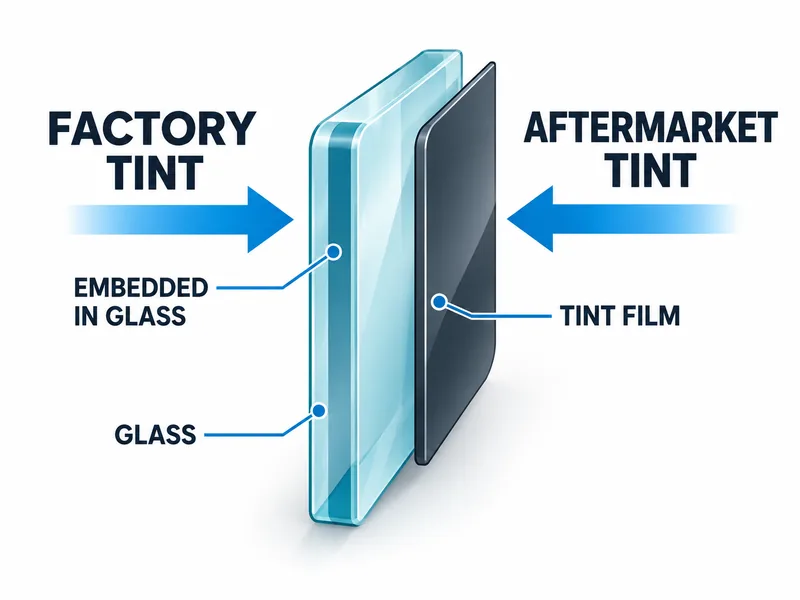
Most SUVs, pickups and minivans come with factory privacy glass on the rear doors, the back glass and any rear quarter windows. Most sedans and coupes don’t. The windshield and front door windows are almost always nearly clear, because federal safety standards for new vehicles require the glass drivers need to see through to let in at least 70% of light. That’s why so many SUVs and trucks look dark in back and clear up front.
Does factory tint block heat?
Not much. Privacy glass darkens the view and cuts glare, but it lets most of the sun’s infrared through, and infrared is the part of sunlight you feel as heat. So a car with dark factory glass can still bake the back seats, the car seat and the cargo area. Its UV protection also varies by vehicle and isn’t rated the way window film is.
Window film is built for exactly what privacy glass skips. Ceramic film targets infrared, so even a light shade blocks a lot of heat, and every film we install blocks 99% or more of UV.
Factory tint vs window film
| Factory tint (privacy glass) | Ceramic window film | |
|---|---|---|
| What it is | Pigment in the glass | Film installed on the inside of the glass |
| Where you find it | Rear windows of most SUVs, trucks and minivans | Any window, in the shade you choose |
| Heat rejection | Low | High: HITEK Ceramic IR rejects 75% of infrared, Ceramic Ultra 96% |
| UV protection | Varies, not rated | 99%+ on the films we carry |
| Shade | Set by the automaker, usually about 15–25% | 5% to 70%, your choice |
| Front doors | Almost always near clear | Any legal shade (25%+ in Texas, film and glass combined) |
| Removable | No | Yes, by a shop |
Infrared figures are HITEK’s published specs. Factory tint shades vary by make, model and year.
Can you tint over factory tint?
Yes. Window film goes on the inside of the glass, and factory tint is inside the glass itself, so they don’t interfere with each other. Film over privacy glass is one of the most common jobs we do. It’s also legal in Texas: rear side windows can be any darkness, and so can the back glass if the vehicle has outside mirrors on both sides. See Texas tint laws.
There are two reasons to do it:
- Heat. A light ceramic film, even 50% or 70%, adds real heat rejection without making the back any darker than you want.
- Privacy. A darker film makes the back windows close to blacked out, if that’s the look you want.
How dark it gets with film on top
Shades multiply. Film and glass each let through a share of light, so the result is darker than either one. Factory glass at 20% with a 50% film lets through about 50% of 20%, or 10%.
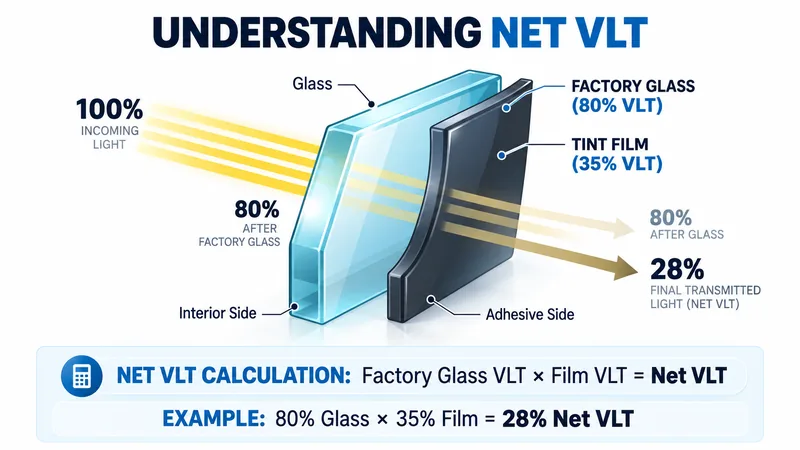
| Film on 20% factory glass | Approximate result | How it looks |
|---|---|---|
| 70% ceramic | ≈14% | Slightly darker than factory; mostly a heat upgrade |
| 50% ceramic | ≈10% | Noticeably darker, still easy to see out at night |
| 35% ceramic | ≈7% | Very dark; strong privacy |
| 20% ceramic | ≈4% | Near blackout; can be hard to see out at night |
Estimates. Real readings depend on your glass, so we meter it on the car. Very dark rear glass makes backing up at night harder; your backup camera helps.
Matching the front doors
The most common call we get: “My SUV has factory tint in back. Can you make the fronts match?” Yes, with one catch. Texas requires front side windows to let in at least 25% of light, measured through the film and glass together. Factory privacy glass is often darker than that, so a legal front door can come close to the back but may not match it exactly.
We usually install 30–35% ceramic on the front doors. It meters legal on most vehicles, blends well with factory privacy glass from the outside, and blocks a lot of heat where you’re sitting. A front-doors-only job is one of our lowest-priced installs.
Factory tint or film? How to tell
Roll the window down and look at the top edge. That’s where film gives itself away.
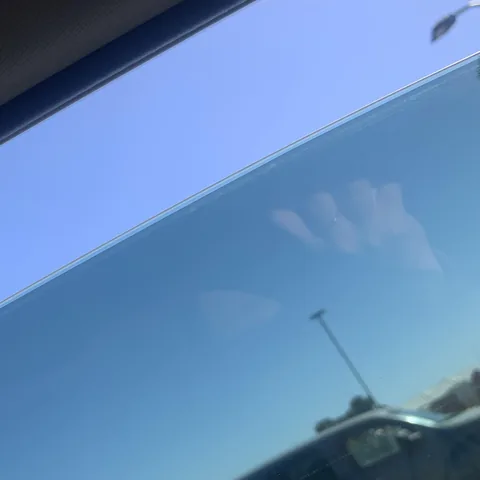
Film edge just below the top of the glassAftermarket film 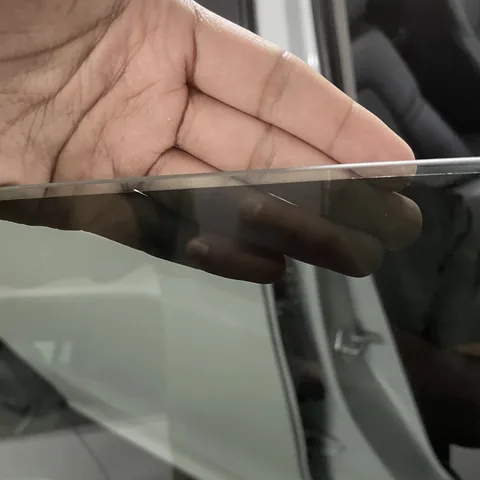
Clear strip above the filmAftermarket film
- Look at the edges. Factory tint goes all the way to the edge of the glass. Film usually stops just short of the edge, and you can often see that line when you roll the window down.
- Check the inside surface. Film is on the inside and sometimes shows a slight edge, scratches or bubbles. Factory glass is smooth and the same all the way through.
- Purple or bubbling? That’s failed aftermarket film, never factory tint. Old film can be removed and replaced; see ceramic window tint.
- Not sure? Text us a photo or stop by and we’ll check it with a meter.
What we usually recommend
| Vehicle | Front doors | Rear windows |
|---|---|---|
| SUV, truck or minivan with factory tint | 30–35% ceramic | Light ceramic (50–70%) for heat, or darker for privacy |
| Sedan or coupe without factory tint | 30–35% ceramic | 15–20% ceramic |
| Glass roof or sunroof | – | Light ceramic overhead; see ceramic tint |
Every car we tint gets ceramic film, starting at $249. See the price for your exact vehicle in the instant quote, or call or text (832) 492-5314.
More: car window tint in Houston, Texas tint laws, what tint costs in Houston, ceramic vs carbon tint.
Frequently asked questions
What is factory tint?
Factory tint, or privacy glass, is pigment added to the glass when it’s made. It’s usually on the rear windows of SUVs, trucks and minivans, typically about 15–25% visible light, and it can’t be removed.
What percentage is factory tint?
Factory privacy glass is usually about 15–25% visible light transmission, depending on the vehicle. Front door glass is usually 70% or lighter.
Does factory tint block heat?
Very little. Privacy glass darkens the view but lets most infrared through. Ceramic film over it adds heat rejection; HITEK Ceramic Ultra rejects 96% of infrared.
Can you put tint over factory tint?
Yes. Film goes on the inside of the glass and works fine over privacy glass. It’s legal on rear windows in Texas, and on the back glass when the vehicle has outside mirrors on both sides.
Is factory tint legal in Texas?
Yes. Glass installed by the manufacturer that meets federal standards is legal. Texas rules apply when you add film, especially the 25% minimum on front side windows.
Can I make my front windows match my factory tint?
Close, but often not exactly. Front side windows must meter at least 25% in Texas, and privacy glass is often darker. Most owners choose 30–35% ceramic on the fronts, which blends well.
Can factory tint be removed?
No. The color is in the glass itself. The only way to change it is to replace the glass.
Ready for cooler glass?
Get an instant price online any time, or call or text us. Shop hours: Mon–Sat 9 AM–8 PM, Sun 9 AM–7 PM at 2401 Fountain View Dr, Floor 1, Houston, TX 77057.