
Quick answer
Heat control window film is a thin solar film applied to the inside of your home’s windows that reflects and absorbs part of the sun’s energy, so less heat and glare reach the room. On Houston homes it matters most on west- and south-facing glass. Spectrally selective films such as 3M™ Prestige cut heat while looking close to clear; darker films add glare control and privacy. Texas Tinted installs 3M™ and HITEK heat control films across Houston.
Fix the room that’s hot every afternoon
The thermostat says 74, but the living room with the big west windows feels like 80 by four o’clock. The A/C isn’t broken. The sun-facing glass is adding heat that the rest of the house never sees, and blinds only stop it after it’s already inside.
Heat control film stops part of that energy at the glass. The room stays closer to the thermostat, the glare drops, and you can open the blinds again.
Heat control film on real homes
Sun-facing glass, filmed from the inside.
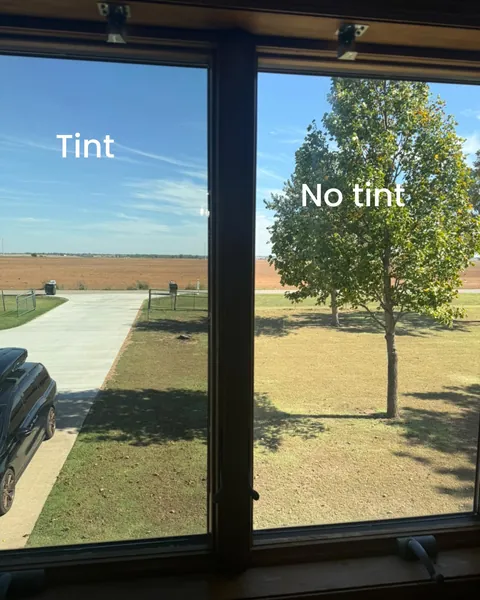
Filmed vs. bare glassHeat control film 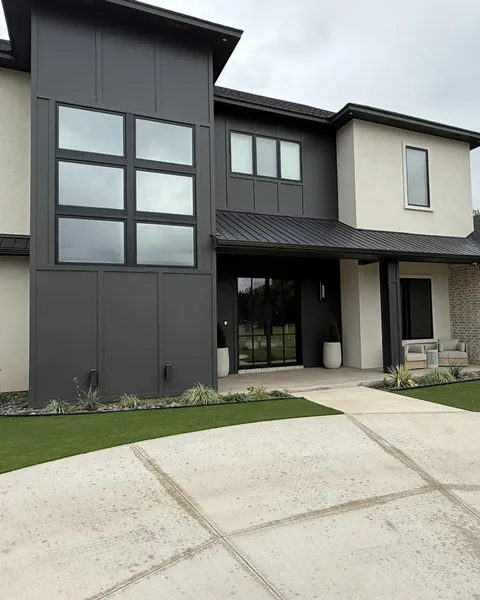
Modern two-storyHeat control film 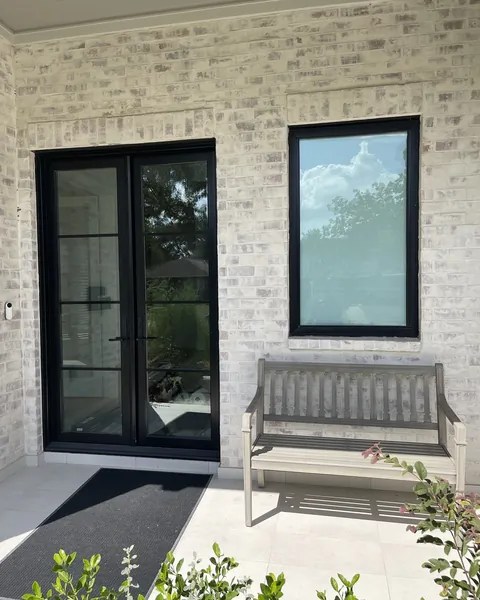
Front porchHeat control film 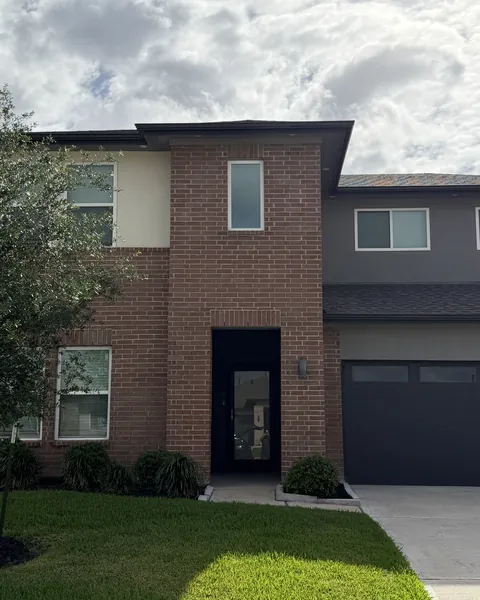
Two-story homeHome window film
What happens to sunlight at filmed glass
Sunlight is about half infrared, a little under half visible light, and a few percent ultraviolet. Film reflects part of it, absorbs part of it, and lets the rest through. That’s why the number to compare is total solar energy rejected (TSER): it counts all of the sun’s energy kept out, not just the light you can see.
Shade alone is a poor guide. A light spectrally selective film can reject more heat than a darker dyed film, while leaving the room bright.
Choosing heat control film for a home
Start with the goal for each room. Many homes use one film on the west side and a lighter one elsewhere.
| Goal | Film | Look | Trade-offs |
|---|---|---|---|
| Cut heat, keep the house looking the same | 3M™ Prestige, HITEK Ceramic Clear | Close to clear glass, low reflection | Less glare reduction than darker films |
| Strong heat cut with a slight tint | 3M™ Ceramic Series, HITEK Ceramic DR | Slight tint | Rooms a little dimmer; still a natural look |
| Hot west windows plus glare and daytime privacy | 3M™ Night Vision | Darker, low reflection inside | Darker glass; better night view than mirror films |
| The most heat rejection, where a mirrored look is fine | HITEK Silver Reflective | Mirrored outside | May not suit HOA rules; mirror effect indoors at night |
| Heat and glare control with a tinted look | HITEK Neutral View, Carbon View, Bronze | Gray, charcoal or bronze tint | Darker glass from the street; compare TSER on the data sheet |
Product availability and exact specs vary by shade. We bring samples and the maker’s data sheets.
Which windows to film first
| Side of the house | When the sun hits | What to expect |
|---|---|---|
| West | Mid-afternoon to sunset, at the hottest time of day | Usually the first windows to film. Low sun gets under porch roofs and overhangs. |
| South | Through the middle of the day | Steady sun; roof overhangs help more in summer than in winter. |
| East | Morning | Bright, low sun in breakfast rooms and bedrooms; less heat than the west side. |
| North | Little direct sun | Rarely needs heat film. Filmed for privacy or UV when the rest of the room is done. |
Many homes get most of the benefit by filming only the west and south sides. Upstairs windows come next, because heat rises and second-floor rooms are often the hardest for the A/C to reach.
Glare on TVs and work screens
Glare is about visible light, not heat. A film with lower visible light transmission (VLT) cuts glare on TVs and monitors; a dual-reflective film like 3M™ Night Vision does it while keeping a clearer view out at night.
For a home office, film the window behind or beside the screen. For a media room that needs full darkness, black out film is the other option.
Two-story rooms and patio doors
Tall family rooms, stair windows and sliding doors are where heat and glare are worst and blinds are hardest to use. We plan access for high glass when we price the job.
Energy savings: what we can and can’t promise
Film lowers the cooling load from sun-facing glass. How much that changes your bill depends on how much glass faces the sun, the glass you already have, shade from trees and neighbors, your A/C and how you use the house. We don’t promise a number.
Comfort usually changes the day the film goes on. If you want to measure savings, compare the same months year to year. How to judge it yourself.
What heat film won’t do
- Fix air leaks, attic insulation or a failing A/C.
- Make a dark film automatically cooler: compare TSER, not shade.
- Keep mirror-like privacy at night; reflective film flips when it’s brighter inside.
- Suit every window: some glass can’t take certain films, so the glass check comes first.
What home window tinting costs
Our prices
Home window film is priced by the square foot of glass: about $4–6 per square foot on larger projects and $12–14 per square foot on smaller jobs, with a $500 minimum per job. The more glass you film, the lower the price per square foot. The film matters too: decorative and privacy films generally cost less than solar control films. Your estimate shows the exact price for your windows and the film you choose.
Heat film is usually a west- and south-side project. Because of the minimum, doing a whole side at once is often the best value.
Glass safety first: we check each window’s glass type (single-pane, dual-pane, low-e, tinted, tempered, laminated) against the film manufacturer’s film-to-glass guidelines before recommending a film. Some films add heat stress to certain glass, and the right match protects your windows.
Related: best film for west-facing windows · UV & fade protection · low-e film for older windows.
Frequently asked questions
What is the best window film to keep heat out of a house?
It depends on the room and the look you want. Spectrally selective films such as 3M Prestige cut heat while looking close to clear. 3M Night Vision cuts more heat and glare with a darker look. We compare films by total solar energy rejected, not by shade.
Does darker window film block more heat?
Not necessarily. Darker films block more visible light, which helps with glare, but a light spectrally selective film can reject as much or more heat.
Which windows should I tint first?
West-facing windows, then south-facing and upstairs windows. Many homes get most of the benefit from those alone.
Will heat control film make my house look different from the street?
Low-reflective films like 3M Prestige look close to clear glass from outside. Reflective films look mirrored, which some HOAs don’t allow.
Can heat film go on dual-pane low-e windows?
Often yes, when the film is matched to the glass. We check each window against the film maker’s film-to-glass guidelines first.
How much does heat control film cost?
Home window film is priced by the square foot of glass: about $4–6 per square foot on larger projects and $12–14 per square foot on smaller jobs, with a $500 minimum per job. The more glass you film, the lower the price per square foot. The film matters too: decorative and privacy films generally cost less than solar control films. Your estimate shows the exact price for your windows and the film you choose.
Get a price for your windows
Send your window sizes or a few photos through our estimate form and we’ll price the film for you, no visit needed. Prefer to talk it through? Call or text (832) 492-5314.