
Quick answer
Low-e window film is a clear film with a low-emissivity coating that slows heat passing through glass in both directions. On older single-pane windows it makes rooms more comfortable year-round: less radiant heat in summer and less chill near the glass in winter. Texas Tinted installs 3M™ Thinsulate™, a clear low-e film, on Houston homes, keeping the original windows and their look.
Keep the old windows, lose the hot and cold spots
Original single-pane windows are part of what makes an older Houston home worth keeping. They’re also why the room is hot by the glass in August and chilly by the glass in January. You feel heat radiating off the pane, then cold coming off it a few months later.
Low-e film changes how the glass handles that heat without touching the frames. It’s clear, so the windows look the way they always have.
How low-e film works
Every warm surface gives off invisible infrared heat. Ordinary glass absorbs that heat and passes it along: into the room in summer, out of the room in winter. A low-emissivity coating gives off much less of it, so less heat moves through the window either way.
Dual-pane low-e windows in newer homes already have a coating like this built in. Low-e film brings a similar benefit to the single-pane glass that older homes still have.
Homes that benefit most
- Bungalows and older homes with original single-pane glass, like many in the Heights and Montrose
- Ranch homes from before dual-pane windows were standard
- Sunrooms and enclosed porches with lots of single-pane glass
- Rooms that feel uncomfortable near the windows in both summer and winter
See home window film in the Heights for historic-home details.
Recent home film jobs
Every window’s glass is checked before we recommend a film.
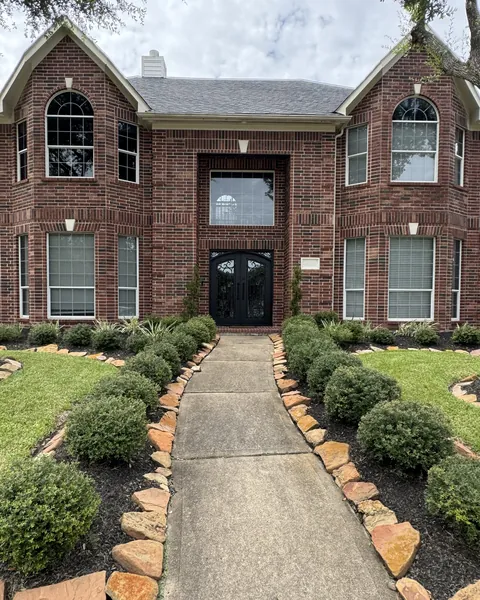
Brick two-storyHome window film 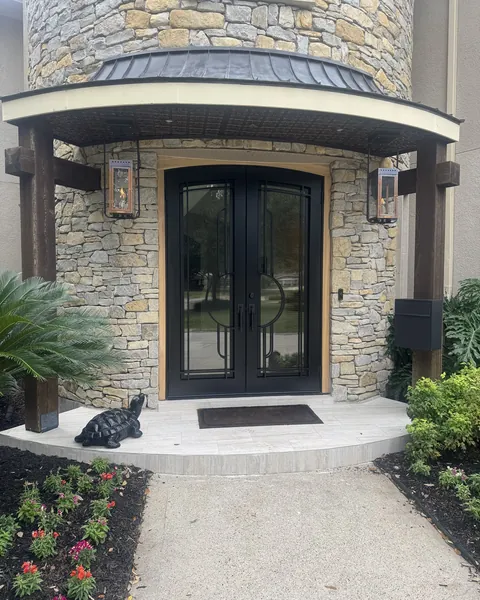
Stone entryHome window film 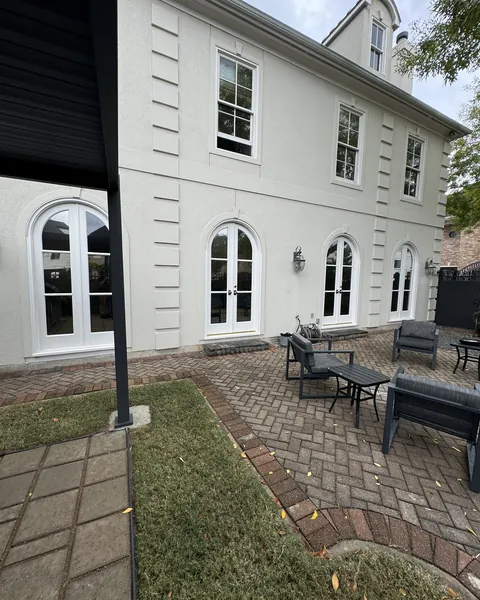
Arched French doorsHome window film
Low-e film or new windows?
| Low-e window film | Replacing the windows | |
|---|---|---|
| Construction | None; film goes on the existing glass | Frames and sashes removed and replaced |
| Time | Usually a day | Ordering lead time plus installation |
| Original look | Kept: same frames, same glass | Changed, which may need approval in historic districts |
| Drafts and leaks | Not fixed | Fixed with new frames and seals |
| Cost | A fraction of new windows | Highest |
Film improves how the glass performs. It doesn’t replace weatherstripping or repair a frame.
What to check first
- The glass: old glass can have chips, cracks or edge damage that raises the risk of heat stress. We check every pane.
- The frames: film won’t stop drafts. Weatherstripping and caulk are the fix for leaks.
- The rules: in historic districts and deed-restricted neighborhoods, a clear film that keeps the original windows is usually the easiest change to make. Check with your association or the city first.
- The goal: if afternoon sun is the bigger problem than winter chill, a solar control film may do more.
Low-e film and summer heat
Low-e film is mainly about insulation, but it also helps with the heat that radiates off hot glass in a Houston summer. On a west-facing wall of old glass, we may suggest a heat control film on that side and low-e film elsewhere. We’ll explain the trade-off with your estimate.
Historic homes
Film goes on the inside of the glass and doesn’t alter the frame or sash, and clear low-e film doesn’t change how the house looks from the street. Historic districts and associations have their own rules, so check before any exterior-visible change. HOA, deed restriction and historic district rules.
What home window tinting costs
Our prices
Home window film is priced by the square foot of glass: about $4–6 per square foot on larger projects and $12–14 per square foot on smaller jobs, with a $500 minimum per job. The more glass you film, the lower the price per square foot. The film matters too: decorative and privacy films generally cost less than solar control films. Your estimate shows the exact price for your windows and the film you choose.
Low-e film is often a whole-room or whole-floor project, which helps the price per square foot.
Glass safety first: we check each window’s glass type (single-pane, dual-pane, low-e, tinted, tempered, laminated) against the film manufacturer’s film-to-glass guidelines before recommending a film. Some films add heat stress to certain glass, and the right match protects your windows.
Frequently asked questions
What is low-e window film?
A clear film with a low-emissivity coating that reduces how much heat passes through glass in both directions, improving the insulation of the window.
Is low-e film worth it in Houston?
It helps most on older single-pane windows, in rooms that are uncomfortable by the glass in both summer and winter. For homes that only fight afternoon sun, a solar control film may do more.
Does low-e film change how my windows look?
3M Thinsulate is a clear film, so the windows look nearly the same from inside and from the street.
Can low-e film replace new windows?
It improves how the glass performs at a fraction of the cost and keeps your original windows, but it doesn’t fix drafts, rot or failing frames.
How much does low-e film cost?
Home window film is priced by the square foot of glass: about $4–6 per square foot on larger projects and $12–14 per square foot on smaller jobs, with a $500 minimum per job. The more glass you film, the lower the price per square foot. The film matters too: decorative and privacy films generally cost less than solar control films. Your estimate shows the exact price for your windows and the film you choose.
Get a price for your windows
Send your window sizes or a few photos through our estimate form and we’ll price the film for you, no visit needed. Prefer to talk it through? Call or text (832) 492-5314.